When I was in graduate school, I admired the work of Herb Goro, a photojournalist . He produced a book called ‘The Block.’ I was inspired by his work and he agreed to be my mentor as I returned to the community where I grew up in Bayside, Queens, New York.
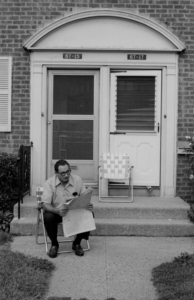
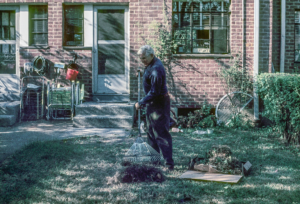
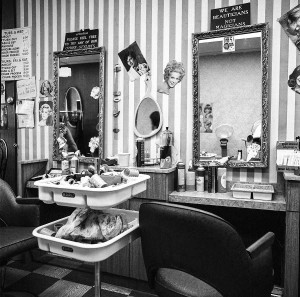
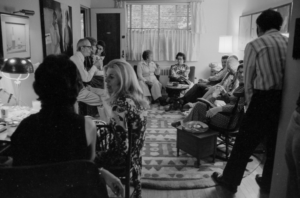
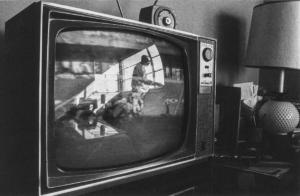
My parents, both first generation Americans, moved there in 1950. Ultimately I decided to base my MFA thesis project on this evolving community. I photographed the residents and interviewed them over a period of several months in the Fall of 1973. The residents were largely children of immigrants or veterans from World War II, who had moved to the “close-in suburbs” to provide more space and less concrete for them and their children.
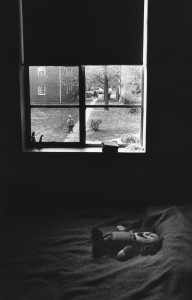
“I think Sam Levinson once wrote or told about the fact that every mother felt responsible for the children in the neighborhood where he grew up. And you don’t really get that if you live in Manhattan, at least I don’t think so. Here it was really true. I knew very well that when I put Neil out there that anybody coming by, any adult would feel responsible for him just as as I felt for my friends children. I’m delighted for that.” …Bayside resident
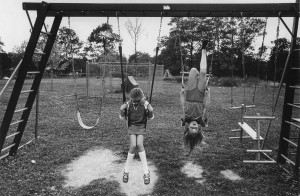
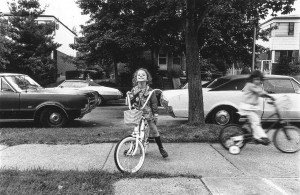
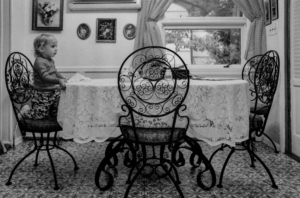
“The common denominator here was the children. I can remember when there was nothing more important, generally speaking, then the children and the good of the children…. “